
Categories
Tags
The Royal Museum in Edinburgh was an impressive place, and Alexander had always enjoyed being there. Scottish history seemed very much alive within its walls. Displayed in glass cases, hanging behind protective panes of glass, or standing imposingly in the middle of a room, the artefacts were both awe-inspiring and deeply evocative. So many relics from the past, each one telling a story of an oppressed people.
He wandered through the galleries, studying the exhibits with the same interest and curiosity he had always felt, even though he had seen many of them hundreds of times before. Some he had encountered not only in museums, but long ago, when they had still been in use, when they had belonged to living people. Every artefact had a story of its own.
What had brought him to the museum that day, however, was an exhibition of recent acquisitions. He had read about it in the newspaper. Most of the new material consisted of handwritten records and works of art from private collections that had been bequeathed to the museum.
It was the written records that interested him most. First-hand accounts from people who had actually lived through historical events—diaries, letters, and similar documents—were rare. The possibility of encountering such personal accounts had immediately piqued his curiosity. Perhaps he would find something particularly interesting among them.
After a brief tour of the exhibition galleries, he made his way to the room where the new acquisitions were on display. Most of the works of art were paintings from the eighteenth and nineteenth centuries by unknown artists. Alongside them stood several glass display cases containing books, letters, and other handwritten documents. Alexander walked slowly along the row.
Most of the books were diaries. He was almost itching to pick them up, turn their pages, and read the words for himself, but he knew that would never be permitted. Not even his generous donations to the museum—which he always made anonymously—would grant him such privileges.
Instead, he contented himself with studying the pages that had been left open for visitors to see. As he read, he tried to imagine the people who had written the words long ago. He studied the sweeping curves and distinctive shapes of their handwriting, trying to picture the hands that had formed each letter and the people behind the words.
Then, quite suddenly, he stopped. He leaned closer to the glass and stared at the open page of one of the diaries. The writing was barely legible, the ink having faded badly with age. It appeared to be the lyrics of a Gaelic song, though entire lines were missing. The title, however, was still clearly visible.
The Empty Hearth
The memory came flooding back. The song had been written during the Clearances, when families had been forcibly driven from their homes in the Highlands and on the Scottish islands. It had been a time when not only homes and livelihoods had been taken from them, but their history and language as well—even their names.
Alexander closed his eyes, trying to reach further into the memory. There it was. The sad, haunting melody. The words. He had heard the song so many times, most often sung by women. He could still remember their voices, carrying the sorrow of those who had been forced to leave everything they had known behind.
Slowly, he opened his eyes again. His gaze fell upon a sheet of paper lying beside the open diary. It bore the museum's logo and contained a short appeal to visitors. Anyone who remembered the song was invited to come forward, as the museum hoped to recover the complete lyrics. Alexander stared at the notice for a long moment. He knew the words. Every single one of them. He could fill in the missing lines without hesitation. But if he did, there would inevitably be questions. How did he know the song? Where had he learned it? Why was he able to remember a piece of music that had been almost entirely lost to history?
The risk was too great. Alexander had learned, over the years, that it was better not to invite questions about his past. He was always careful never to attract attention, never to give anyone a reason to look too closely at him. But there might be a way. He could provide the missing lyrics anonymously. A letter with no return address. Typed on a computer rather than written by hand. Nothing that could reveal who had sent it.
The decision came quickly. As soon as he returned home, Alexander would write down the lyrics to The Empty Hearth.
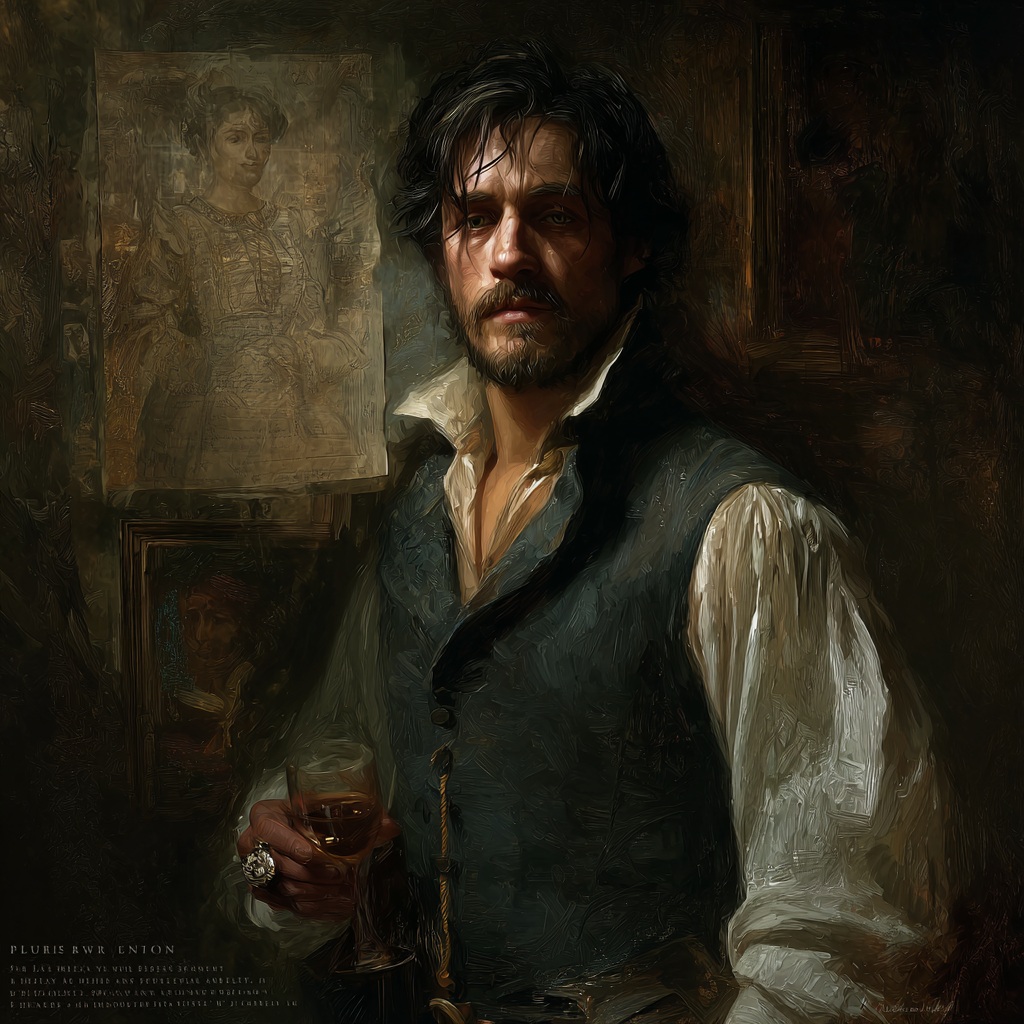
(The picture was created using AI.)
