
Categories
Tags

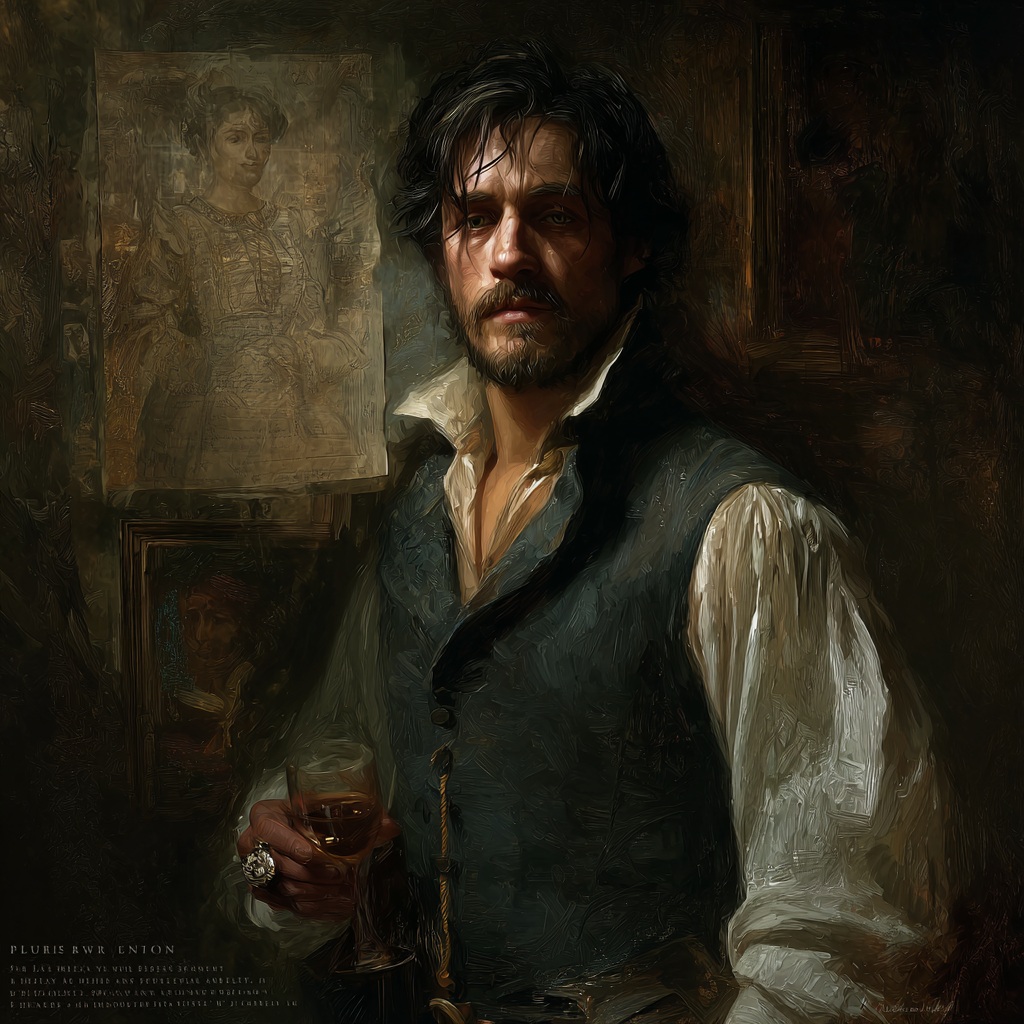
Alexander moved slowly from the entrance area with its museum and souvenir shop onto the sodden moor, where memorial stones marked the positions of the clans during the Battle of Culloden. Stones for every clan that had fallen here. Flowers and wreaths lay before most of them—quiet offerings left by descendants. Culloden was not a place visited by tourists alone.
For him, returning was always unsettling. The knowledge that he himself had stood here in 1746 weighed heavily on him. Each time his boots touched the moor, the past surged back with merciless clarity. Voices rose again—the cries of the wounded, the screams of the dying. Muskets thundered in his ears, steel rang against steel, and the relentless beat of the drums echoed through his mind. He smelled the acrid smoke of gunfire once more, mingled with the copper-sweet stench of blood that had soaked the ground and stained the heather red. When he closed his eyes, he saw them falling beside him—family, friends, brothers-in-arms. And yet he returned, time and again, because nowhere else did he feel closer to them.
He followed the narrow-paved path between the stones until he came to a halt before the memorial of his own clan—the MacDougalls. Fresh flowers lay at its base. He, too, carried a small bouquet. Alexander knelt and placed it gently beside the stone.
“Fàilte oirbh, a chàirdean1,” he murmured softly in Gaelic.
His fingertips traced the cold surface of the stone. Even now, nearly three centuries later, he remembered every one of them. Their names stirred their voices in his mind; their faces rose before him as vividly as if he had last seen them only yesterday. But they had been gone for a very long time.
A poem by Robert Burns came to him then.
Scots, wha hae wi Wallace bled!
Scots, wham Bruce has often bed,
Welcome to your gory bed,
Or to victory!
Now's the day, and now's the hour;
See the front o' battle lour;
See approach proud Edward's power,
Chains ans slavery!
Wha will be a traitor knave?
Wha can fill a cowardis grave?
Wha so base as be a slave
Let him turn and flee.
Wha for Scotland's king an law,
Freedom's sword will strongly draw,
Freeman stand, or freeman fa'
Let him follow me!
By oppression's woes and pains,
By your sons in servile chains,
We will drain our dearest veins,
But they shall be free.
Lay the proud usurpers low!
Tyrants fallin every foe!
Liberty's in every blow!
Let us do or die!
There had been a time when Scotland stood proud and defiant, when it had resisted English domination with fire and steel. Men like Robert the Bruce and William Wallace had led the clans into battle—and into victory. Stirling Bridge. Bannockburn. Flodden Field. Prestonpans. A long, bloodstained legacy that had ended here, on this bleak moor, when the Jacobite rising and Scotland’s fight for freedom and independence had been crushed for the last time.
Yet the yearning for freedom had never truly died. It still lived on in the hearts of the Scottish people—deep-rooted, restless, enduring. Perhaps one day, Scotland would rise again as a proud nation, free and independent.
Alexander rose slowly, brushing the rain from his coat as it shielded him from the wind sweeping across the moor.
“Bidh cuimhne agam ort an-còmhnaidh, gus an coinnich sinn a-rithist latha air choireigin2,” he said quietly, once more in Gaelic.
[ 1 Greetings, my friends.]
[ 2 I will always remember you until we meet again one day.]