



Story
Complete
Finding Sources & How to Cite Them: A Guide
by
Categories
EducationalMusings & MumblingsRated - Wholesome/All-AgesSITE ADMINSoloTutorialWriting - General
Tags
how-tosourcescitationstutorialsRPL officialtutorial
Admin Preamble
So many questions have been asked lately about how to find and cite sources, we thought it was about time RPL provided some resources on how to do that. Below is a very informative and amazingly thorough guide on how to find the source of something and how to cite it. It's very in-depth and provides guidelines for best practices on citing sources. We'd like to emphasize that this is a resource for RPL members, not requirements. We simply ask that members do their best to cite sources. We're not asking for thesis paper level citations on status posts. We're just looking to establish a baseline of copyright and citation credit compliance for legal protection of the site and everyone on it. There's been a lot in the news lately about this, so we're just trying to stay ahead of the curve.
General RPL Citation Guidelines
PHOTOS AND OTHER MATERIALS
Cite the source, not the search engine. Pinterest, Instagram, Tumblr, and Twitter can all be cited properly with a link to the post where you found the material. If the picture already has the source on it (like a url or a header or some other indication), it's fine as it is. Just saying "source: pinterest" or "gif: tumblr" isn't citing the source. If you honestly made an attempt and really can't find the source for something, we wouldn't bother saying 'found on google' or saying 'source unknown' as a citation. Like one long-time RPL member said - it's meaningless clutter at that point.
INSPIRED BY
If you're doing something "inspired by" another writer here at RPL - please get their permission first. Most people are totally cool with it as long as you credit them. Usually a simple tag is fine for this, but some authors may ask that you link to their original work as a part of the deal. Please respect that if that's the arrangement.
If it's inspired by another source (as many of our characters are overall), you don't need to cite the source with everything you write. Just make sure your character info page or bio gives credit to the actual owner of the material (like JR Ward, if you're writing BDB, for example) and link the wiki if you used material from it.
WE WANT TO STRESS AGAIN
We don't want to be harsh about this or constantly patrolling. We're not looking to get people in trouble. We're looking to protect the site from legal problems. As long as everyone makes a reasonable effort, that's all we ask.
And now to the guide!
Finding Sources & How to Cite Them: A Guide
Kindly contributed by Arsène Lupin.
Hello everyone!
This is a guide on how to find the sources for the text you wish to quote, or the image you wish to share.
My credentials? I’m a student of library and information science. Some of the things librarians do are to organize, categorize and verify information. We’re often tasked with retrieving hard-to-reach information, and how to label it.
This post will not discuss whether you should or shouldn’t source something – I’m just going to tell you what a source is, how to find a source and how to cite it properly.
Disclaimer: All screenshots here are mine. Flowchart designed by me using lucidchart.
HOW AND WHAT TO CITE
“What is a source?”
You might have been confused when people talk about sources – what is the source? If you’ve seen the same funny status post on several websites, it can be hard to know which one you should link to.
The source is always the owner of the intellectual property or the holder of the copyright license. Laws on this are different in different countries and continents, but the holder of the intellectual property is usually the creator of the thing you want to use.
“What does it mean to “cite a source”?”
Think of it as the 3 C’s; Content, Creator, Context.
When you are going to cite something, you want to be citing the true content – you want to have the actual quote, and not just how you remember it, or the actual artwork, not a fraud. This is the Content. You want to find out who said, wrote, or created the content, not just whoever repeated it – that is the Creator. You also want to have the context of the content. Read the whole page, watch the whole interview, make sure you have the whole picture and aren’t just zoomed in on a bit of it.
The golden rule of citing is to make it as easy as possible for anyone else to find – even someone who isn’t used to searching.
This might sound like a lot of work, but it will be pretty easy if you read on and implement the tools I provide here.
The easiest way to cite...
... When you have a digital source is to embed the link in the text, like so a video about foster kittens.
This is achieved like this:
But maybe you want your sources to be cited in a descriptive way, and you're unclear on how to do it - what should you include and what should you leave out? Maybe it doesn't feel appropriate to embed a link in your text, or you're using a link that might be deleted at some point, so you want to let any future readers know what the source was so they can find it themselves even if the link is broken. This is great if, for example, your source is from a tumblr blog as when anyone changes their handles on there, all of their posts get new links.
Do NOT cite the direct link for a photo as your source. I've seen this being done, and it's unnecesary. If you embed a photo from a direct link in your post, YOU DON'T NEED TO ADD THE DIRECT LINK AGAIN. What you SHOULD do is add the post link. The one that directs us to the user that uploaded it and on what webpage.
This is a direct link to an image: https://66.media.tumblr.com/05932af75045dfda9ee412cc87b0a70f/tumblr_pszsoh2SYM1tvvm7oo1_1280.jpg
And this is the link to the original post:
https://www.catsonsynthesizersinspace.com/post/185543166387
So following are explanations on how to cite anything you want to use.
“I’m linking a screenshot of a post in my story, what should I state as my source?”
The original post, if possible. Sometimes a post has been deleted, and cannot be linked to. In this case, you would post the screenshot and source it like this:
Original post made by twitter user lolcat on 2019-03-24, deleted, screenshot posted by twitter user loldog on 2019-04-13.
You would then link the post embedded in the text, or after the text.
If the screenshot is deleted at a later date, you have still stated when it was posted and by whom.
“Isn’t it enough to just say I found it on loldogs twitter?”
No, no, NO. This happens too often – people just say they found the picture or post on someone’s Instagram or twitter. Mostly everyone of us has been guilty of this at some point, and while it’s sometimes hard to find the original post, that’s the one you should always link to.
If I post a picture from Lolcats twitter that was posted in 2012, and you want to find the whole post, do you really want to scroll through seven years of a twitter account's activity? Remember the Golden Rule – it should be easy for anyone else to find the original post from what you have provided.
Being too lazy to be bothered or being on mobile is not an excuse.
“I really can’t find the original post, what should I do?”
Alright, you have the thing you want to post and despite searching, you haven’t been able to find the original post again. Then you source where you found it, like so:
From user lolcat, original post not found, repost from loldog 2019-04-13
“I want to post a photograph that I didn’t take and don’t own the license to.”
So we’ve all been there. It’s not recommended that you re-upload image files on RPL, but that you link them instead. Image files take up massive amounts of space on servers, servers are expensive. The more space you need, the more servers you need. The page runs on generous donations.
The best way to cite the source is to cite the owner of the image, not just whoever uploaded it. Twitter user lolcat might have uploaded a photo, but the photo actually belonged to loldog. In that case, you would, again, provide a link to the original source, a date, and the name of whoever took the photo.
Example:
“Bob The Dog, 2018, photo by Loldog, linked from Lolcat’s twitter.”
You can add the original post link as a string of text after citing the source, or embed it in the text.
“I want to use a photograph of a piece of art – what do I cite?”
You cite the artwork first, like
“Sculpture of David by Michelangelo in the Accademia Gallery, photo by Lolcat, 2017”
“What about gifs? Do I cite the media it was created from or the creator of the gif?”
You cite the creator. Most people look at GIFs as transformative work, meaning you transform someone else’s work. Here it’s preferable to link back to the original post. If you know what piece of media they were taken from, you could cite that too.
“What about translations?”
If you have a quote that’s translated, you cite it just as you would any other quote, but add who translated it at the end, whether that is you, google translate, or someone else.
“I found it on Pinterest/Tumblr/Weheartit/Reddit. Can I say that’s my source?”
No. That’s like quoting “To be or not to be, that is the question” – My Local Library
"Can I say you found it on google?"
Again, no. Google is not "source". It is a tool to search. Imagine that you go out fishing with a fishing pole. You catch the exact fish you were hoping to catch, and someone asks you where you got it from - you wouldn't say it came from your fishing rod. You would say it came from the river/lake/ocean.
“I saw something that inspired me – what do I do?”
If the person is on RPL, ask their permission before using their work, then cite their original post, like so:
“Inspired by Bob the Dog’s post”with a link to the original post. The word “post” can be replaced by “Photo”, “Biography”, “Story”, “Art”, or whatever else is applicable.
Beyond the politeness of asking permission, you should do so in case the person in question was using someone else’s work and neglected to initially mention it – it gives them a chance to correct that error before the work is spread as their own and misconceptions are made.
Should the content that inspired you exist outside of RPL, you should always make it clear who and what it was inspired from.
A funny tumblr post that is, like, totally something your character would say or do? Credit the original poster.
A piece of fanart that you traced to fit your character? Credit the original poster.
A photo you edited or overpainted/traced? Credit the original owner of the photo and the model if possible.
“I want to use an edit. What do I cite?”
If you aren’t sure what edits are, they are digital edits of photos. There are plenty of photos edited to make the person/s in them look like vampires, to paste a person into a photo they were never in, and so on. Here you credit the person who created the edit, like so: “Photo edit by Lolcat, 2019”
If you are the person editing a photo, you should cite the source of the original photo.
For example, you still need to cite the original source when:
- Applying a filter effect to a photo.
- Adjusting the contrast, brightness or cropping the photo.
- Applying your watermark to a photo doesn’t make it yours, and is frankly unnecessary if you haven’t done anything else to it, or all you’ve done is apply a filter and change the contrast.
- A paint-over of a single photo
- When you use an app (pixlr, picmonkey, photoshop, facetune, etc) to draw over the photo (this is actually paint-over but many people don’t realize it).
“I have a non-digital source, how do I cite it?”
If it’s a book quote, you cite it with author first, title second, and what edition you have.
Example:
"The analytical power should not be confounded with simple ingenuity; for while the analyst is necessarily ingenious, the ingenious man is often remarkably incapable of analysis."
-Edgar Allan Poe, Tales of Mystery and Imagination; The Murders in Rue Morgue, Collector's Edition 2003
-Edgar Allan Poe, Tales of Mystery and Imagination; The Murders in Rue Morgue, Collector's Edition 2003
If it’s a photo you’ve taken or scanned from a physical source, you cite the photographer or the owner of the photo. If the photo is one you’ve taken, you can state that instead (e.g. photo by me, if using, credit @LolCat)
“You clearly hate pinterest. Are there any places to find reference photos?”
Sometimes you just want a picture of a kitten, and it doesn’t need to be a professional shot, and you want to be sure you can use it. Creative commons is a project dedicated to providing content you have permission to use. These permissions (licenses) vary in what they allow, so make sure you read their About and FAQ before grabbing any pictures off there. It’s pretty easy to use and saves you the hassle of having someone tell you they want you to delete the photos you’ve used.
"How do I cite comic books and graphic novels?"
Author first; followed by the title of the comic of novel, then the issue/serial/volume and print edition. If you wish you may insert the character the quote is attributed to before the author name.
Example:
"Anyway, condemning her to an eternity in hell, just because she turned you down... That's a really shitty thing to do."
-Death, Neil Gaiman, The Sandman; Volume 4 'Season of Mists'. 5th printing, fully remastered edition.
-Death, Neil Gaiman, The Sandman; Volume 4 'Season of Mists'. 5th printing, fully remastered edition.
"How do I cite something with multiple authors?"
If it's two authors, you will cite it with both author names listed. If there are more than three, you can use the first listed author's surname followed by "et al.". Example:
Doornbos et al., 2005
FINDING YOUR SOURCES
“Who said this?”
Okay, you’ve got a quote. It’s not your quote, and you don’t remember where you heard it. How are you going to find out who said it?
It’s a 4-step process:
-Write down the quote (write it down, write it down in variations, find synonyms for your keywords, and check for misspellings)
-Find a reported source
-Verify the reported source
-If success – post the source.
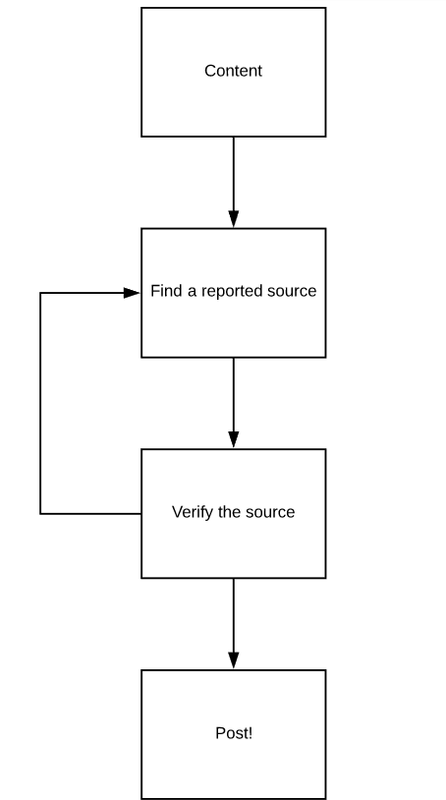
This process is equally applicable to anything you are wanting to find the source for; you might be looking to find the source of a photo, an edit, a video, a piece of fanart, a blog post - whatever you can think off.
For my example, I want to put in the quote “The creature woke up, recognized himself, and wished he’d been somebody else” in the beginning of my new, epic story I’m going to post – it fits the theme perfectly. But I don’t know who said it, or even where I heard it. So I write it down and ask a friend if they recognize it. They tell me they think it’s Tove Jansson.
So I have the quote as I remember it, I have a reported source – a reported source is not a verified source. Even if no one's deliberately lying, it’s easy to mishear or misremember things, and so I go to Google. I put the quote in citation marks, which will have Google search for the exact phrase.
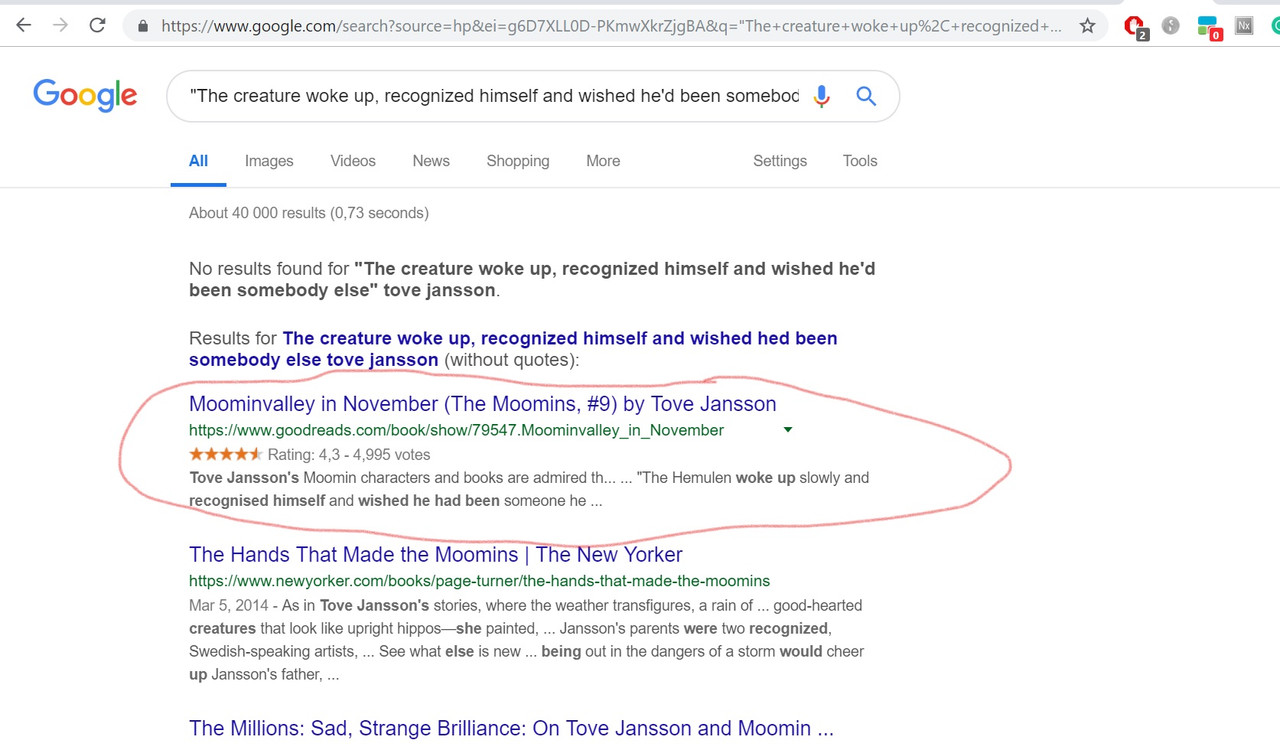
I’m told there were no results, however, there are some helpful suggestions. The first result is from |a href=https://www.goodreads.com/>Goodreads – I’m required to log in and return to the page, then refresh it.
I find the right quote here, from the book “Moominvalley in November”.
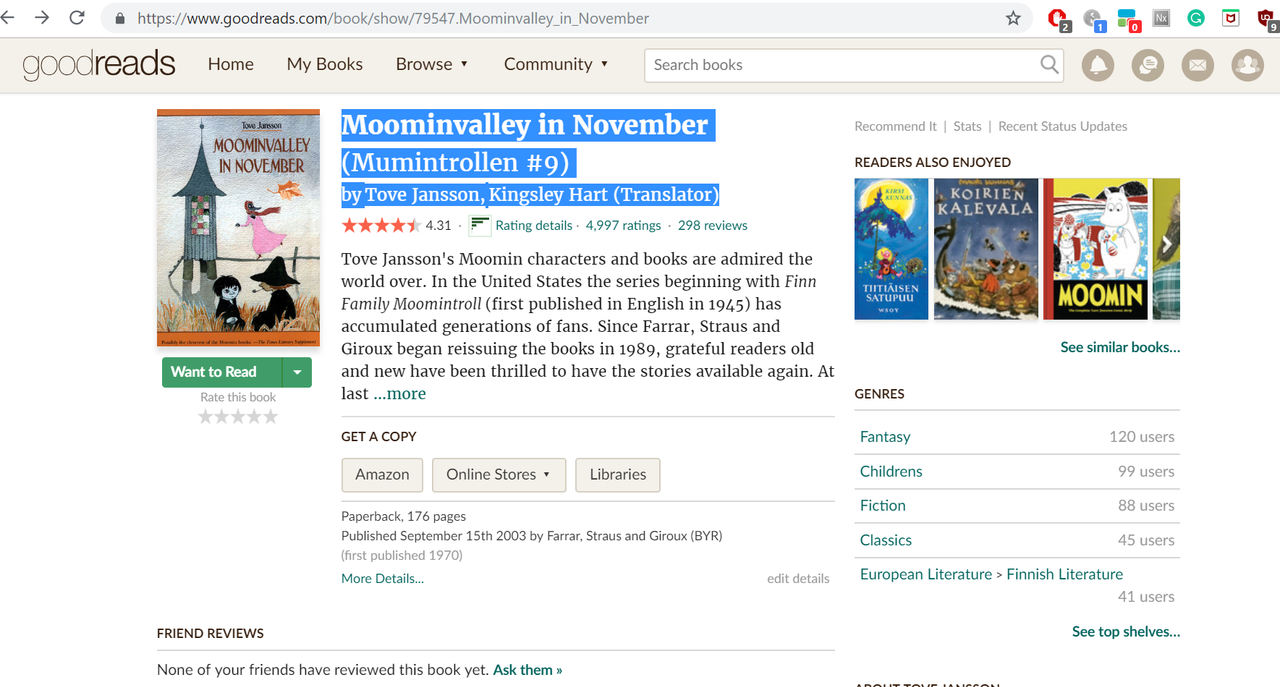
Scrolling down, I see the quotes.
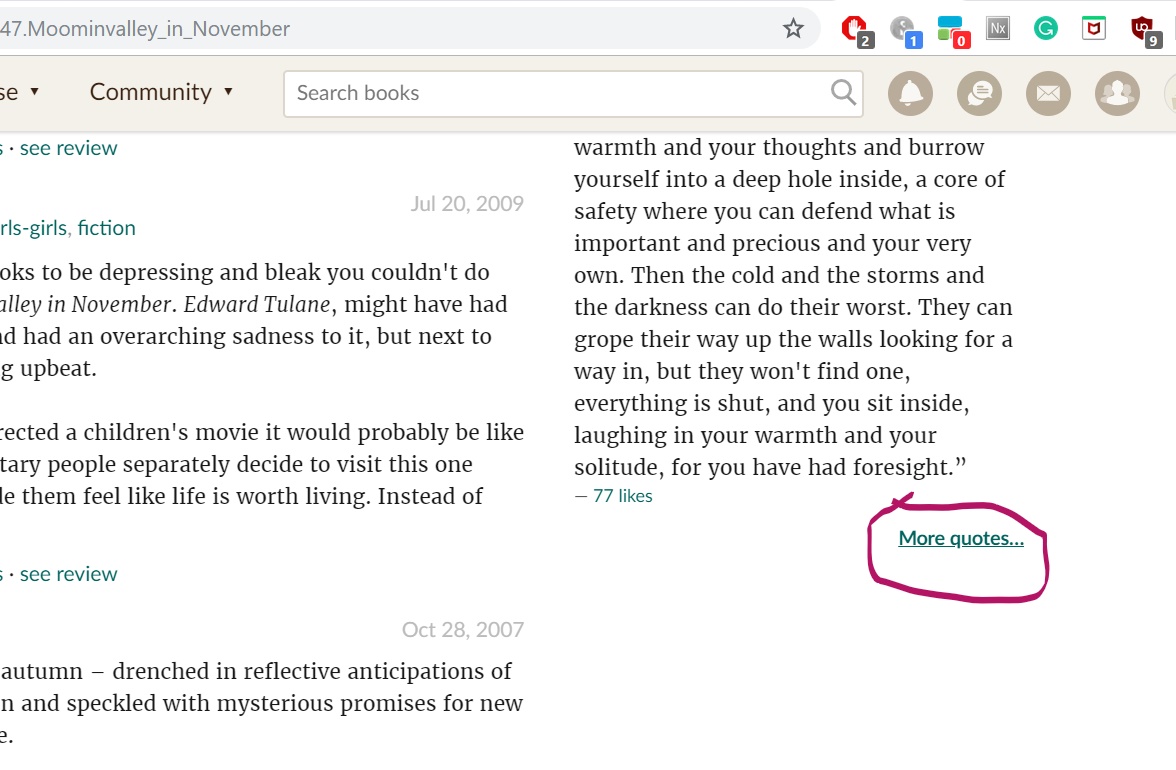
I navigate my way to this quote;
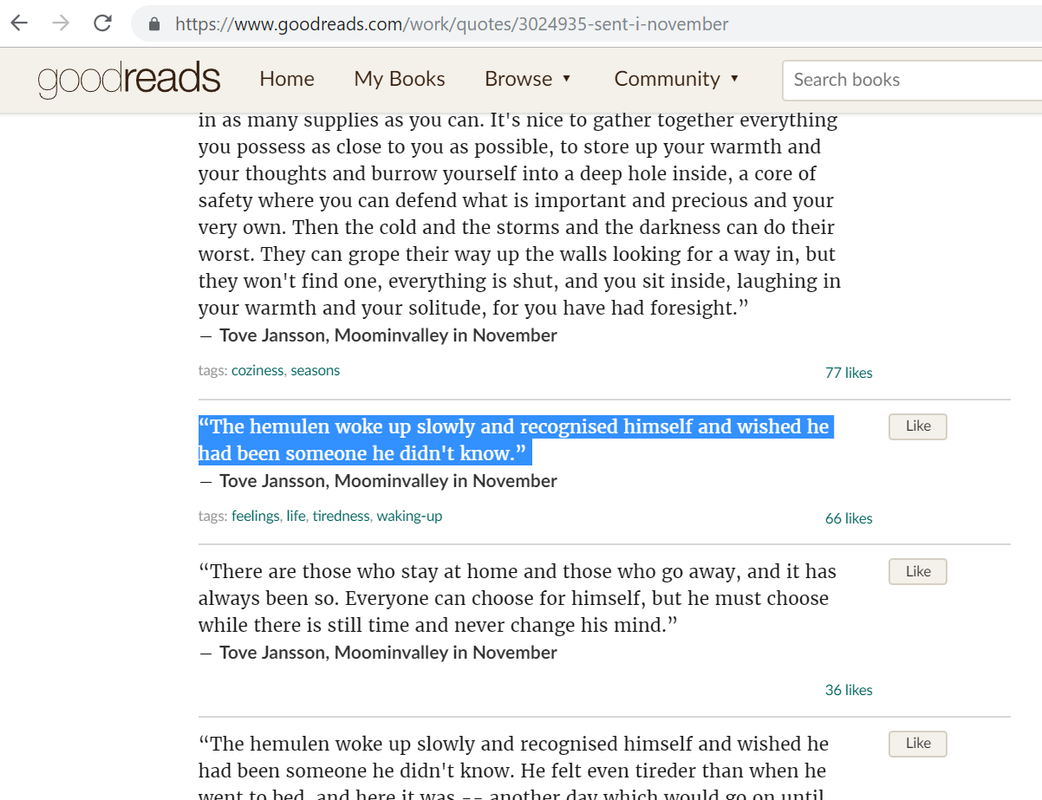
Great, I’ve found the Content, the Creator and I know what the Context is. I could leave it at that, but I don’t know the whole context, and it's very easy to take a line of text, a picture, a segment of video or an audioclip out of its full context. A quote is not a whole book, a part of a picture is not the whole, five seconds of video is not the full film, and so on.
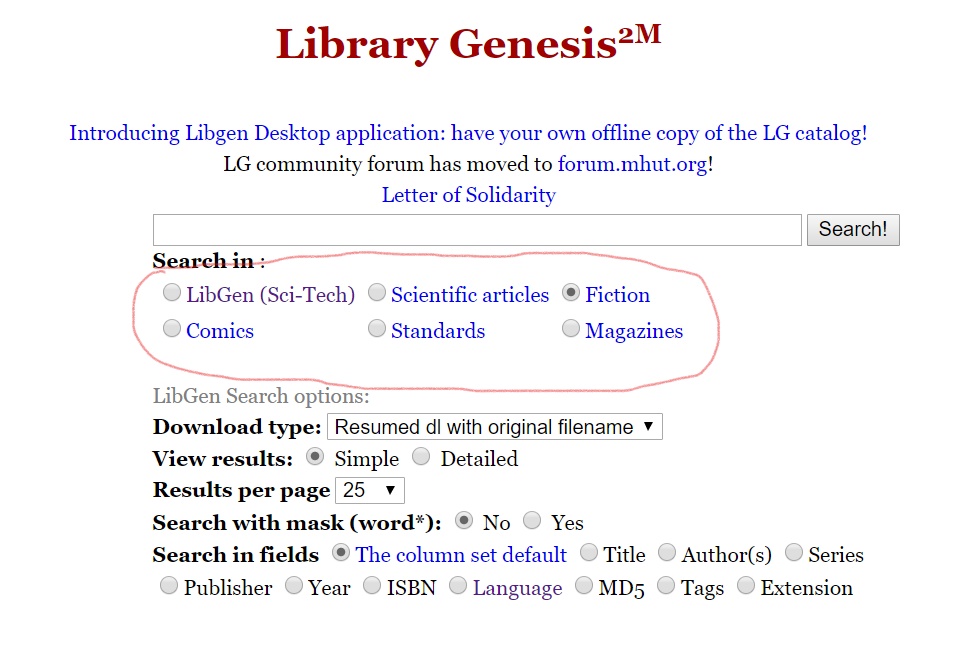
I searched through my university library's collection and found they did have a physical copy of it, but not wanting to go out at the moment, I went to search for an online version. I found mine on Library Genesis (you'll find a full list at the end of resources).
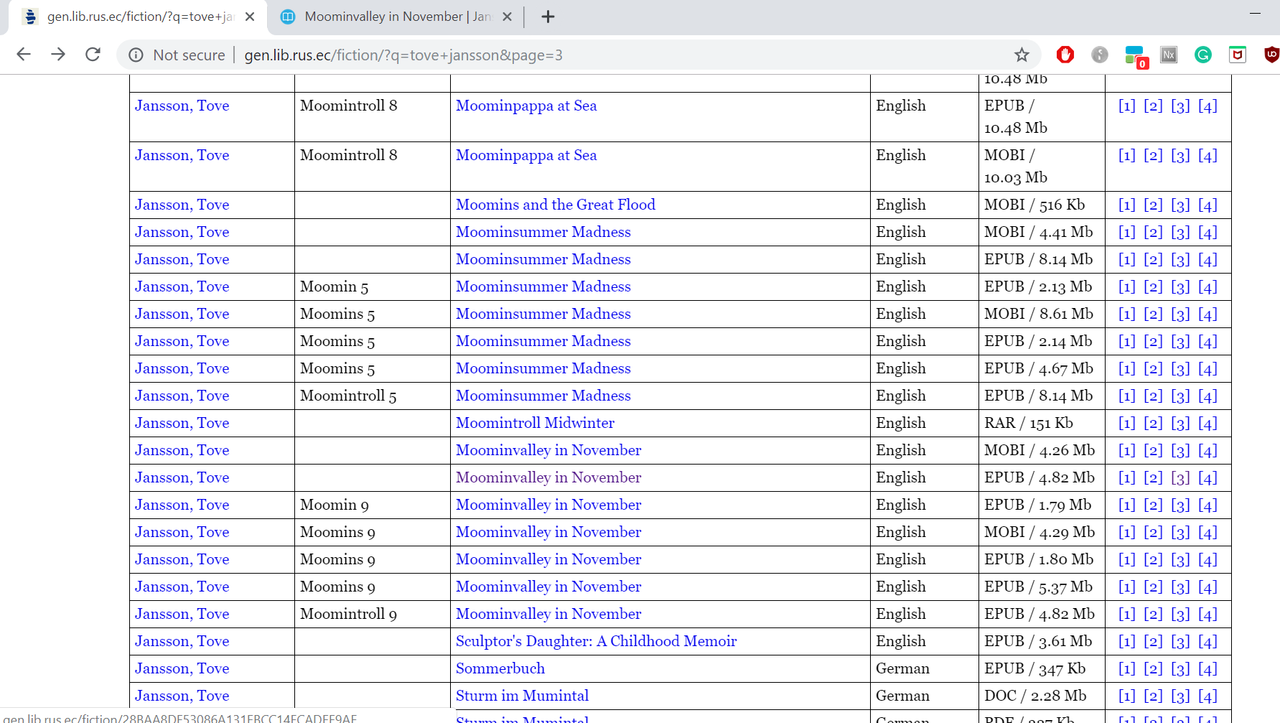
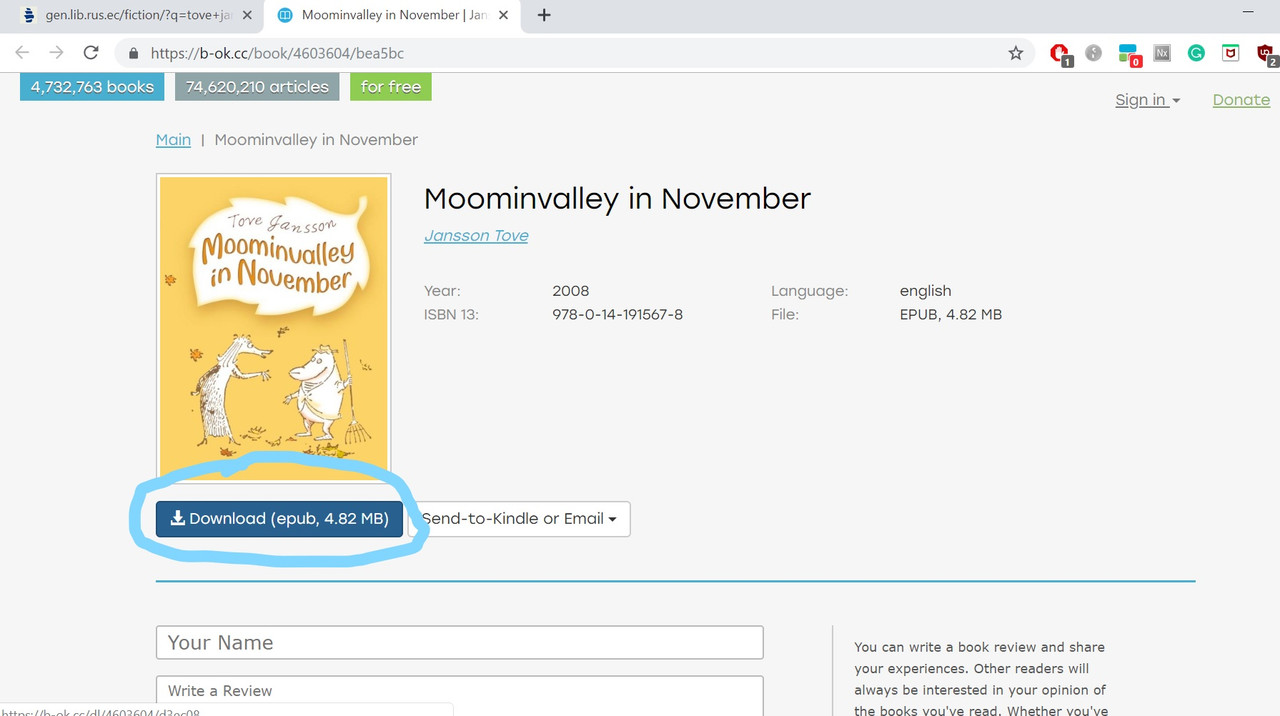
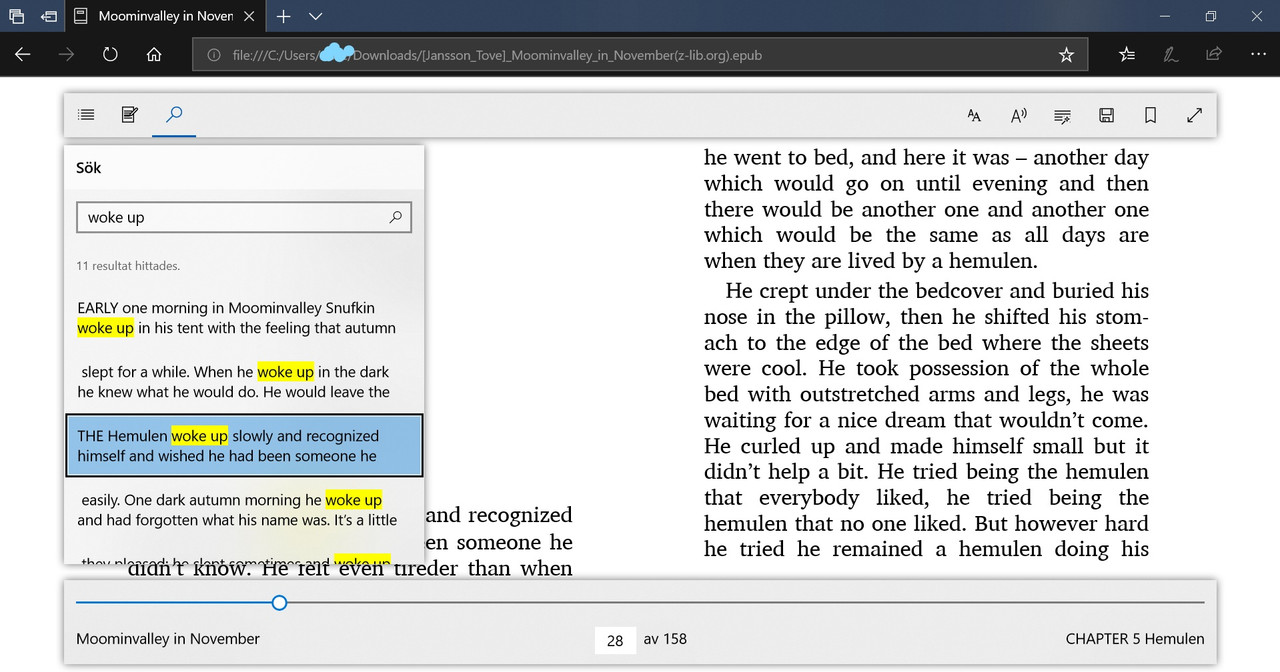
I downloaded and opened the epub file and pressed the keys CTRL and F, allowing me to search for a specific string of words in the document, and I could re-evaluated the quote and if I really wanted to use it.
“How do I find a photo?”
Your first step is to go to google.
You upload the picture you have, or you paste in the url for it. If you’re using google chrome you can right click on the image and press “search google for image”.
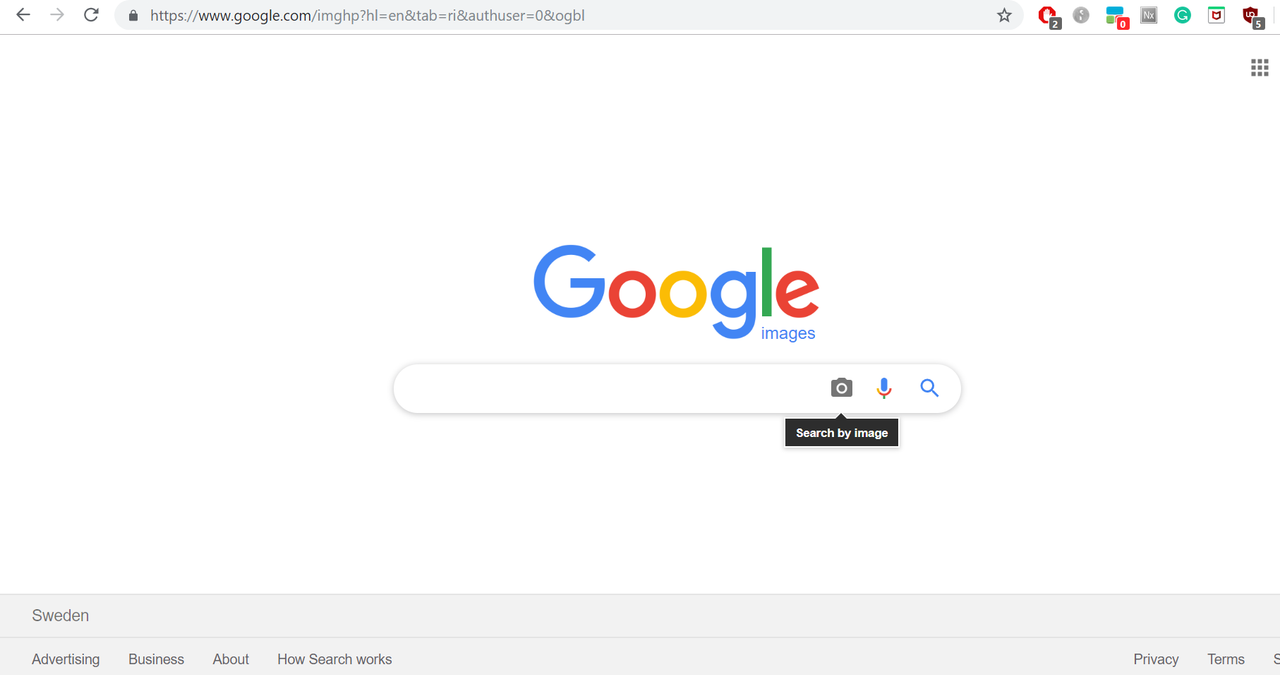
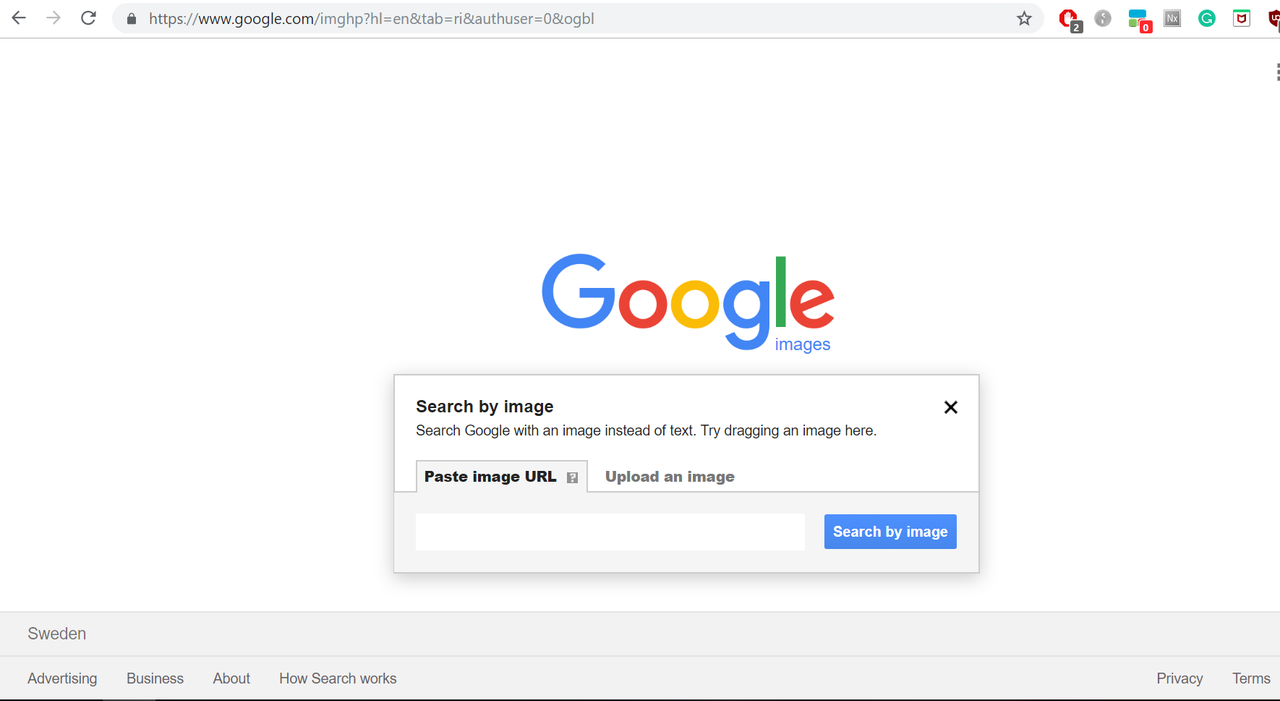
Usually you can get a suggested result like “X in London by Y for GQ Magazine, 2017”. But if you’re looking for the source for a piece of art, you will want to look at “Pages that include matching images”. Here you come into the process of wanting to weed out the weeds – any sources like pinterest or weheartit you can ignore.
Now you won’t necessarily find the source on the first page – that is where people often give up. There’s also a lot of results like instazu or similar – they are mirrors of Instagram. You can browse these and find the post, then go to Instagram.com and search for the poster’s name.
Be skeptical – look at the date. Are there any other results older than that one? Does the poster include a signature? Does it look like the poster’s art-style? If you’re unsure, ask them!
“Where can I find quotes listed with their sources?”
Goodreads will provide you with quotes tagged with certain themes so you can search for things like “love” and get all the quotes tagged with that. They also tell you where the quote is from.
"I'm on mobile, what are my options?"
Apps and libraries are your two main, free resources.
You will want:
- An app for image searching. You can find this by searching for "google image search" in your Apple or Play store. I don't know what the options are for iPhones because I have never had an iPhone but I found this app for android.
- An app for taking notes. Most phones have this kind of app pre-installed, but if yours doesn't, or you want a recommendation for a good one, I recommend Notebook. It autosaves your notes even when you aren't connected to a wifi or using your data. It has tons of functions, is fast and easy to use. It is where I type longer replies when I'm on my phone because I don't have to worry about losing any writing.
- Consider getting a new key input app for your phone. Now this isn't necessary at all, but many of my friends seem to struggle with what I struggled with - typing on your phone. Misspellings, etc. I use Swiftkey, as it allows me to adjust the size of my keys and save things as sticky notes. This has been useful for me when I've been using formatting in my mobile replies or saving the infamous lenny face.
- A library card. Look, I told you, I'm a library student. You knew this was coming. Most public libraries have computers you can use if you have a library card, and because RPL doesn't allow graphic hardcore porn, no one will bat an eyebrow. Anecdote: I've made purchases from adult shops online on library computers, not that I encourage you to do that. Point being, if you want to proof-read your new story, you can do it at the library. If you want to research something, you can do it at your library. Heck, most libraries will have Wi-Fi for you to connect your phone, pad or computer to.
"Resources?"
Get books online for free:
Library Genesis- Before searching, you will need to make sure you are searching in the right area.
Project Gutenburg- A project dedicated to the spread of eBooks for free. Pro-tip; they're registered as a charity in the US so donations to them are tax-deductable (if you're an US resident).
Textbook Nova- Textbooks galore for those times your character is Tony Stark or find themselves in a situation where you need to explain the science of what's going on.
Ebookee- Offers a wide range of different types of books, allows you to browse by category (you want a book on psychology but don't know where to start? Browse their category dedicated to psychology!)
Online Library of Liberty- If you need politics, 'free market', and similar philosophies, OLOL has published all their works online for free. Great if that's what you are specifically looking for.
Photos with their sources:
Creative Commonsis dedicated to keeping the internet free and open, and one way they do this is by bringing out content with a wide license. What that means, basically, is that they share media that you can use, for free, without getting sued. However, do not list these medias without providing the source (usually listed in connection with the photo or other medium) as most often the license is dependent on there being a proper citation when used. It's great if you just want a random cat picture or something else and not be worried that someone is going to harass you.
Tips and tricks:
Finding photos with their original source from a tumblr blog can be a headache as you can make it so that your blog isn't viewable outside of tumblr (meaning you won't see it in Google search results). If you have a tumblr, consider creating a private sideblog to reblog the things you might want to use at some point and still have the source.
Can't find the source after having tried all of the above? Or you don't know how to cite something? Ask your friends! But, remember, your friends aren't paid to do this for you, so be respectful.
Have questions or suggestions? Ask!
Thank you again to Arsène Lupin for such an impressive and thorough resource!