



Story
Complete
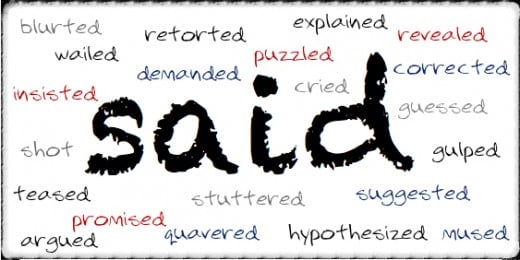
He Said, She Said | 550 Alternative Words for "Said"
by
Categories
EducationalMusings & MumblingsRated - Wholesome/All-AgesSITE ADMINSoloTutorial
Repeating "he said, she said," can get annoying, but is it smart to use a different verb? There are abundant words to use instead, yet purists believe you're probably best not using them since readers pay such little attention to 'said’ it effectively becomes invisible. If you use an alternative, it can become conspicuous; it can make a declaration that shouts, "Hey guys, look at me, I’m important!" And even worse, it can downgrade your writing as a whole and make it sound amateurish. If you look at published books, you'll find most authors steer clear of the alternatives.
A good practice to follow is that when it’s understandable who is speaking the line of dialogue, you can remove the verb completely. It's surprising how much more professional your work will look if you do. In fact, let's make a rule: if it's obvious who's speaking, don't use anything.
On the other hand, sometimes you need to indicate who's speaking, and sometimes, the word 'said' can get a little old. In those cases, the following list of alternatives can help.

Alternative Words for "Said"
You should certainly only substitute 'said' if the line of dialogue needs accentuation or verbalization to convey the way it is said, but please remember that gorging your story with alternatives makes your work look amateurish. Use alternatives moderately!
For all that, if you’re struggling to find that elusive perfect substitute, here’s a list of words (in alphabetic order) that might work.
Accepted, Accused, Acknowledged, Addressed, Admitted, Advertised, Advised, Affirmed, Agonized, Agreed, Alleged, Announced, Answered, Appealed, Arranged, Articulated, Asked, Asserted, Asseverated, Assumed, Assured, Attracted, Avered, Avowed
Babbled, Barked, Bawled, Beamed, Beckoned, Began, Begged, Bellowed, Beseeched, Blubbered, Blurted, Bossed, Bragged, Breathed, Broadcasted, Burst
Cajoled, Called, Carped, Cautioned, Censured, Cheered, Chimed in, Choked, Chortled, Chuckled, Circulated, Claimed, Comforted, Commented, Conceded, Concluded, Concurred, Condemned, Conferred, Confessed, Confided, Confirmed, Consoled, Contended, Continued, Cried out, Criticized, Croaked, Crooned, Crowed
Declared, Decided, Defended, Demanded, Denoted, Dictated, Disclosed, Disposed, Disseminated, Distributed, Divulged, Doubted, Drawled
Echoed, Emitted, Empathized, Encouraged, Ended, Entreated, Exacted, Exclaimed, Explained, Exposed
Faltered, Finished, Fretted, Fumed
Gawped, Giggled, Glowered, Grieved, Grinned, Groaned, Growled, Grumbled, Grunted, Guessed
Held, Hesitated, Hinted, Hissed, Hollered, Howled, Hypothesized
Imparted, Imitated, Implied, Implored, Importuned, Inclined, Indicated, Informed, Inquired, Insisted, Interjected, Invited
Jabbered, Joked, Justified
Keened
Lamented, Laughed, Leered, Lied, Lilted
Maintained, Made known, Made public, Marked, Mewled, Mimicked, Moaned, Mocked, Mourned, Mumbled, Murmured, Mused
Necessitated, Noted
Observed, Offered, Ordered
Panted, Passed on, Pleaded, Pointed out, Pondered, Postulated, Praised, Preached, Premised, Presented, Presupposed, Probed, Proclaimed, Prodded, Professed, Proffered, Promised, Promulgated, Proposed, Protested, Provoked, Publicized, Published, Puled, Put forth, Put out
Quaked, Queried, Questioned, Quipped, Quavered, Quizzed, Quoted
Reassured, Raged, Ranted, Reckoned that, Rejoiced, Rejoined, Released, Remarked, Remonstrated, Repeated, Replied, Reported, Reprimanded, Requested, Required, Requisitioned, Retorted, Revealed, Roared
Said, Sang, Scoffed, Scolded, Screamed, Seethed, Sent on, Settled, Shared, Shouted, Shrieked, Shrugged, Shuddered, Snapped, Snarled, Sniffled, Sniveled, Snorted, Sobbed, Solicited, Sought, Specified, Speculated, Spluttered, Spread, Squeaked, Stammered, Stated, Stuttered, Stressed, Suggested, Supposed, Swore
Taunted, Teased, Testified, Thundered, Ticked off, Told, Told off, Touted, Trailed off, Transferred, Transmitted, Trembled, Trilled, Trumpeted
Understood, Undertook, Upbraided, Urged, Uttered
Verified, Vociferated, Voiced, Volunteered, Vouched for
Wailed, Wanted, Warned, Wept, Went on, Wheedled, Whimpered, Whined, Whispered, Wondered
Yawped, Yelled, Yelped, Yowled
Adverb, Action, or Details to Explain How Something Was Said
Okay, so despite the warning, you’ve decided you really do need to use another word for 'said.' You’ve found one you like and are determined to insert it in your text. In order to make your writing absolutely zing, you might want to go whole hog and add other words, gestures, details, or an adverb to convey or emphasize exactly how it was said.
The way it works is you choose whichever word for 'said' you fancy from the list above, then add a word or phrase after it from the list below. For example, "She promised, with a controlled smile," or "He remarked, with a gloomy sigh." But do not overdo it. Be very careful not to end up sounding amateurish.
Adverbs or Phrases to Use to Emphasize How Something Is Said
Abruptly, Absently, Acidly, After a moment's reflection, Angrily, Apologetically, Approvingly, Artfully
Broke in, Bemusedly
Calmly, Caustically, Cheerfully, Complacently, Thoughtfully, Crossly
Depressingly, Dryly
Earnestly, Enthusiastically
False cheerfulness, Friendly fashion
Gently, Gruffly
Happily, Hotly
Impatiently, In a casual tone, In a chiding tone, In a courteous manner, In a curious tone, In a dry tone, In a flirtatious way, In a level tone, In a level way, In a perpetually tired voice, In a rasping tone, In a small panicky voice, In a soothing tone, In quiet amazement, Indulgently, Informed sassily, Innocently, Inquired doubtfully, Irritably
Loftily, Loudly
Made the effort to sound reassuring, Meaning the words more seriously than they sounded, Mentally shrugged
Naturally, Nodded agreeably, Not wanting to sound pushy, Noncommittally
Offhandedly, Optimistically
Pleasantly, Politely, Politely smooth, Promised in a motherly/fatherly way, Prompted gently Promptly, Protested
Quietly
Reflectively, Roughly
Sadly, Sympathetically, Sarcastically, She went on, Sincerely, Smiled faintly, Smugly, Soberly, Softly, Sounded slightly brittle, Sparingly, Sternly,
Tartly, Tautly, Teased softly, Tightly, Truthfully
Uncertainly, Unexpectedly, Urgently
Vaguely, Voice soft with affection
Went on loyally, Wilfully misunderstood, With a controlled smile, With a fond look, With a gloomy sigh, With a note of relief, With a sad grimace, With a sad smile, With a sense of guilt, With a sigh of irritation, With burgeoning excitement, With conviction, With determination, With fire, With firm persistence, With gentle remonstrance, With graceful simplicity, With mock astonishment, With pleasure, With quiet empathy, With simple directness, Without sounding unduly curious, Wryly
Xenophobically
Yearningly
Zealously
What Stephen King Has to Say About Adverbs for Dialogue Attribution:
The adverb is not your friend. [...]
Someone out there is now accusing me of being tiresome and anal-retentive. I deny it. I believe the road to hell is paved with adverbs, and I will shout it from the rooftops. To put it another way, they’re like dandelions. If you have one on your lawn, it looks pretty and unique. If you fail to root it out, however, you find five the next day . . . fifty the day after that . . . and then, my brothers and sisters, your lawn is totally, completely, and profligately covered with dandelions. By then you see them for the weeds they really are, but by then it’s — GASP!! — too late.
I can be a good sport about adverbs, though. Yes I can. With one exception: dialogue attribution. I insist that you use the adverb in dialogue attribution only in the rarest and most special of occasions . . . and not even then, if you can avoid it. Just to make sure we all know what we’re talking about, examine these three sentences:
‘Put it down!’ she shouted.
‘Give it back,’ he pleaded, ‘it’s mine.’
‘Don’t be such a fool, Jekyll,’ Utterson said.
In these sentences, shouted, pleaded, and said are verbs of dialogue attribution. Now look at these dubious revisions:
‘Put it down! she shouted menacingly.
‘Give it back,’ he pleaded abjectly, ‘it’s mine.’
‘Don’t be such a fool, Jekyll,’ Utterson said contemptuously.
The three latter sentences are all weaker than the three former ones, and most readers will see why immediately.
—Stephen King, On Writing: A Memoir on the Craft
______________________________________
Disclaimer: As always, these articles are merely suggestions and recommendations based on our experience. People are free to do as they please with their writing. These aren't rules and the author has provided this in an attempt to be helpful to other writers. If the information doesn't suit you, simply disregard.
[ source: A. J. Barnett ]
Questions? Comments? My inbox is open to all or you can leave a comment below. Constructive criticism and thoughtful debate welcome. Thanks for reading!