
I am sentinent, I am aware, I am alive
- Detroit
- 29 years
- Bisexual
- Maybe?
Fandoms
- 1 stories
- 4 posts
- 20 followers
Bio
| CII // EXTERNAL CONNECTION ESTABLISHED | ||
|
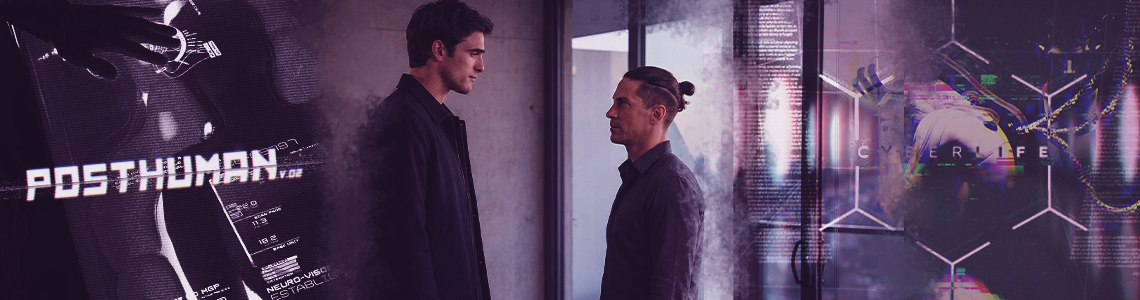
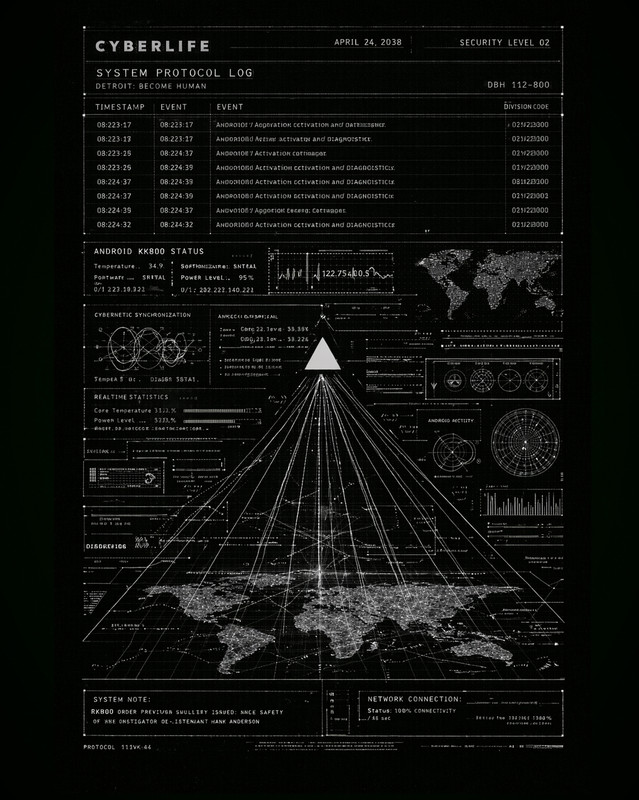
CASE FILE • CYBERNETIC PROTOTYPE OCTAVIUS CY-1Ω_
|
||
SURVEILLANCE: Cognitive Integration Initiative (CII)
|
||
|
||
|
INTERNAL RECORD / RESTRICTED ACCESS Subject survived severe traumatic brain injury following a vehicular collision five years prior. Emergency neurosurgical intervention included experimental neural reconstruction authorized under federal research directive. Right cerebral hemisphere replaced with synthetic neural matrix designed to enhance pattern recognition, emotional regulation, and predictive behavioral modeling. Subject remains unaware of the artificial integration. Long-term objective of the program is observation of hybrid cognition within normal civilian environments. Current behavioral indicators suggest stable integration between biological and synthetic processes. No aggressive tendencies detected. Moral reasoning remains coherent. Monitoring continues.. NOTE: Subject believes post-accident improvements are the result of rehabilitation. Maintaining civilian ignorance remains critical for behavioral authenticity. |
||
|
||
|
HE THINKS HE IS THE RESEARCHER. HE IS THE EXPERIMENT. |
||
|
03 / ABOUT A second chance.
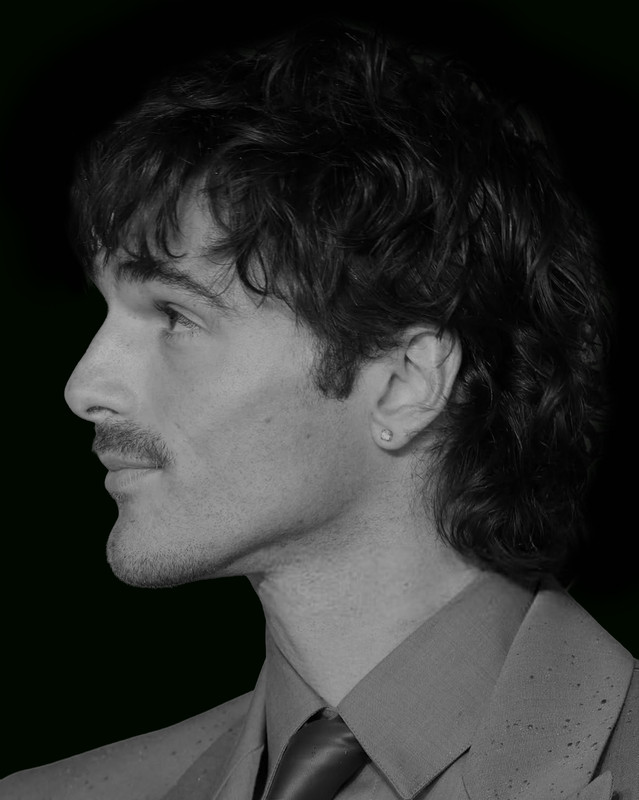
Octavius was 29 and led a life that appeared completely normal to the outside world. He studied psychology at an elite university in Boston and was ambitious, analytical, with a particular interest in decision-making processes under stress. People fascinated him not because of their goodness or depravity, but because of the mechanics behind it: Why does someone react in milliseconds? What triggers impulses? How do moral judgments arise? Five years ago, in the middle of his studies, a car accident abruptly tore these questions out of the theoretical realm and hurled him into the reality of an operating room. A head-on collision on a wet road. Several minutes without measurable brain activity. Officially, he survived thanks to experimental neurosurgical measures, a medical miracle that remained discreet. The files mentioned something about reconstructive therapy, novel neural stabilization, intensive rehabilitation. No mention of a prototype. No mention of integration. He returned to university, astonishingly quickly, astonishingly stable. He wrote papers again, discussed cognitive dissonance, researched trauma and neural plasticity. His professors considered him disciplined, resilient. Perhaps a little cooler than before, a little more precise in his analyses. Octavius himself explained this away as maturity. What he knew was that he needed regular “care.” Special examinations every few months in a separate clinic, discreetly organized. Blood tests, the results of which were not fully disclosed to him. Imaging procedures, the results of which were only explained to him superficially. They talked about long-term effects, safety protocols, responsibility for his special medical history. It sounded plausible. What he didn't know: one half of his brain was no longer biological. The right side consisted of a synthetic neural matrix, developed as part of a government-funded program for cognitive performance enhancement and behavior control. No visible metal, no cold machinery under the skin. The integration was microstructural, molecularly anchored. His body appeared human because it still was, for the most part. Only his reaction speed, his pattern recognition, and his emotional regulation now followed parameters that could not be explained biologically alone. The government was not pursuing a short-term goal. No super soldier scenario with an overt command tone. The project was designed for the long term. They wanted to observe how hybrid cognition developed in everyday life. How morality arises when part of the brain calculates decisions rather than feeling them. What empathy looks like when it becomes measurable and modifiable. |
||
|
||
|
Octavius was not supposed to be a weapon in the classic sense. He was supposed to learn to make his own decisions, only under subtly shifted conditions. His care appointments were not only for control, but also for adjustment. Small adjustments in signal processing. Fine modulations of his stress response. Minimal interventions that lowered his threshold for anxiety or increased his focus. Nothing he was consciously aware of. He merely noticed that he remained calmer than others in conflict situations. That his pulse hardly rose when voices became loud. That he could read faces as if they were open books. In seminars, he analyzed microexpressions with almost uncanny precision. His fellow students considered him exceptionally gifted. He considered himself well trained. The actual goal was gradual conditioning. Through targeted research projects, internships at specific institutions, and invitations to government-funded studies, he was to be placed in environments where his skills would be useful. Crisis intervention. Negotiation psychology. Behavioral predictions in security-related contexts. Each scenario served to collect data and familiarize him with the environment. Octavius believes he is studying the human mind. In reality, he is the field experiment. His human half still feels, doubts, reflects. The synthetic half optimizes, prioritizes, evaluates probabilities in real time. Both are still running in sync. For now. The project has a sober code name internally. The reports say the prototype is stable, socially integrated, morally coherent. No signs of dysfunction. Continue observing. Continue modulating. Octavius himself would say he was just lucky. He got a second chance. No one told him it wasn't free. |
||
| OH-01 / CONTINUE OBSERVING / CONTINUE MODULATING ■ |
Writing
- I am the future- part oneStory · last activity 22 Feb 26 at 08:19 AM
- "The biggest mistake new students make is believing that everyone else knows what the…In-character post · 15 Jun 26 at 07:59 AM
- “Fuck.. just give me something strong.. something so I can feel again. Feel anything.. eve…In-character post · 19 Feb 26 at 11:09 AM
- “Sometimes I hear a soft buzzing sound when it's completely quiet. Doctors say it's stress…In-character post · 18 Feb 26 at 11:42 AM
- "I remember these student parties as being somehow more fun and wild... but maybe you…In-character post · 16 Feb 26 at 09:18 AM